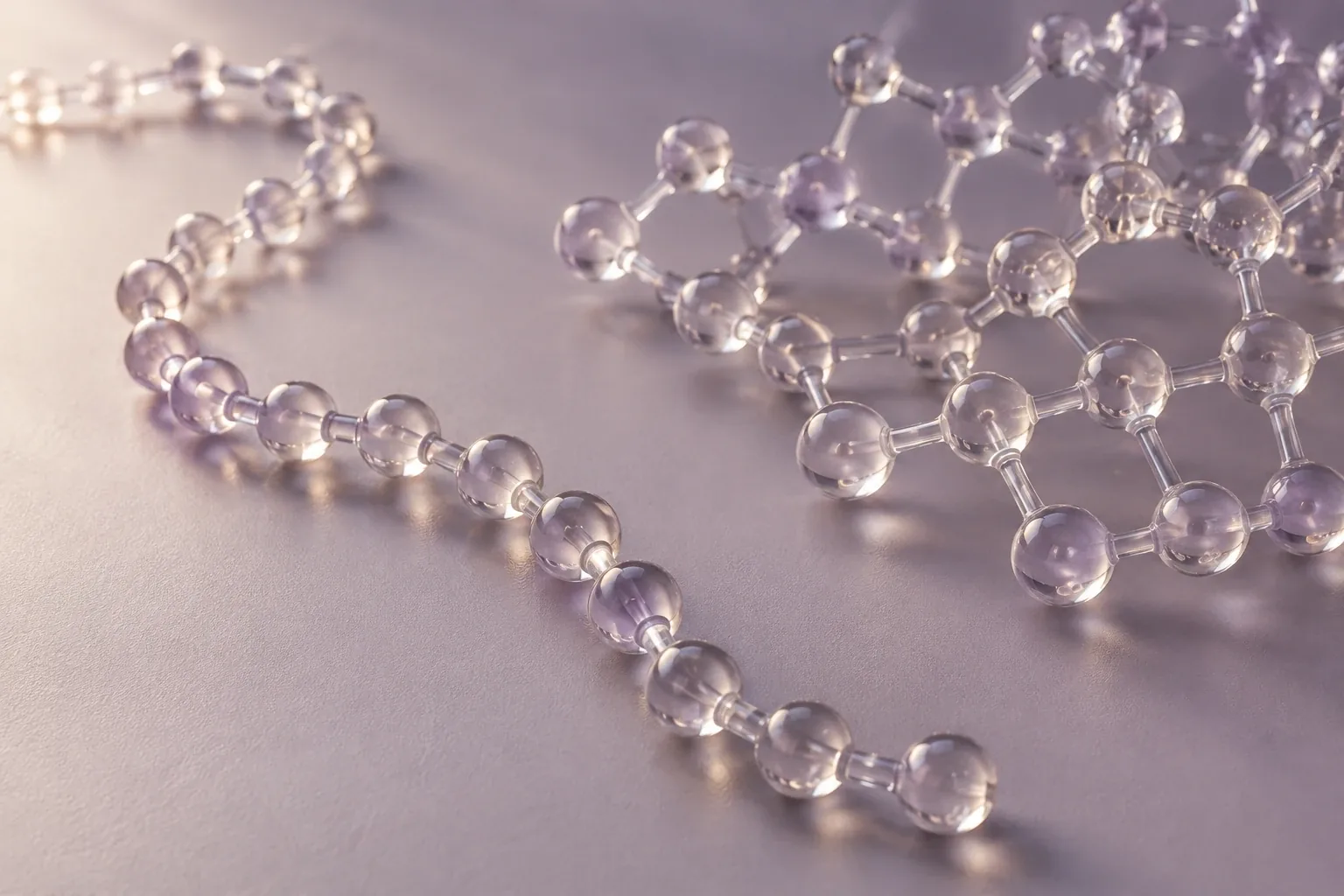
Neon and UV-reactive colours: what fluorescence is
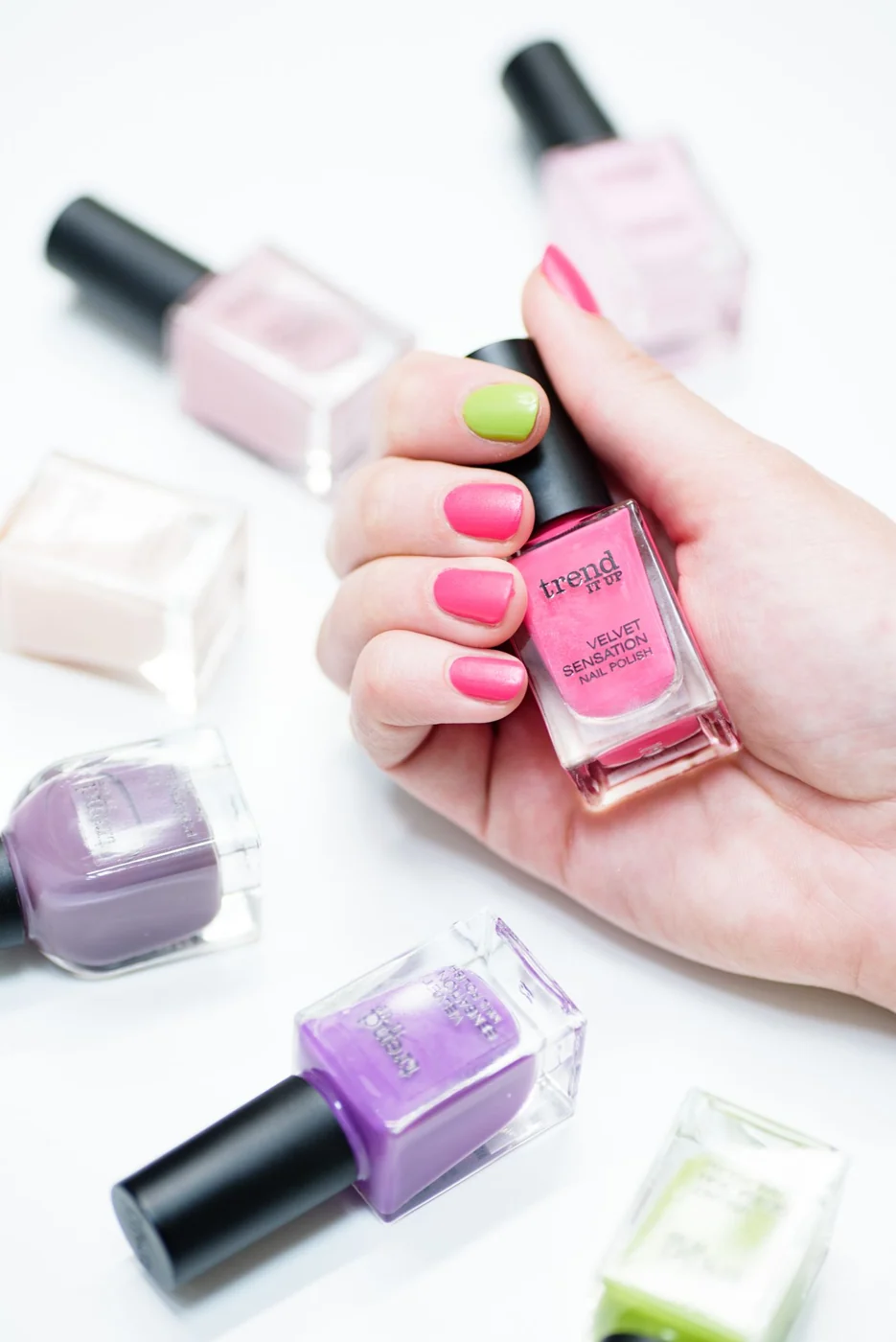
Fluorescence turns absorbed light into emitted light. In the ordinary Stokes process described here, a molecule loses some energy first. It then emits light at a longer wavelength. This extra light can make fluorescent colours look unusually vivid. A neon label alone does not prove the effect. Cirque Colors says Superfreak glows under black light; fluorescence could explain that claim, but the page names no pigment. [1][2][3]
KEY TAKEAWAYS
- A molecule absorbs a photon, passes through an excited state and emits another photon. Thermo Fisher gives a typical excited-state lifetime of 1–10 nanoseconds. In the model described here, the emitted photon has less energy and a longer wavelength. The difference is the Stokes shift. [1]
- In this Stokes-shift model, the emitted light has a longer wavelength than the excitation light. That emission is distinct from reflection. [1][4]
- Daylight fluorescent pigments add emitted light to reflected light. That helps explain their vivid appearance. A supplier’s technical article also notes that sunlight can degrade them. [2]
- Neon does not guarantee fluorescence. Cirque Colors makes a more specific claim: its neon crème glows under black light. This article does not give instructions for UV sources. [3]
The three stages of fluorescence
Thermo Fisher’s fluorescence primer, written for laboratory dyes, calls fluorescence the result of a three-stage process that occurs in certain molecules. The table follows the stages in the order it describes them. [1]
The Stokes shift is the difference between absorbed and emitted energy or wavelength. Evident’s microscopy guide explains the longer-wavelength emission in this model. A larger shift makes it easier to separate the emitted light from the excitation light. [1][4]
| Stage | What happens | Detail stated |
|---|---|---|
| 1. Excitation [1] | A photon from an external source is absorbed by the fluorophore, creating an excited electronic singlet state. | The source of the photon is external to the molecule. |
| 2. Excited-state lifetime [1] | The excited state exists for a finite time, during which part of its energy is dissipated, leaving a relaxed excited state. | Typically 1 to 10 nanoseconds. |
| 3. Emission [1] | A photon is emitted and the fluorophore returns to its ground state. | The emitted photon has lower energy, and therefore longer wavelength, than the excitation photon. |
Why a fluorescent colour can look brighter than an ordinary one
An ordinary pigment reflects some of the light reaching it. A fluorescent pigment can also emit light. In an October 2023 PCI article, two pigment-supplier authors explain that their materials absorb shorter wavelengths of sunlight and emit longer ones. This added emission creates the luminous appearance. Their explanation does not measure the brightness of any named nail polish. [2]
The same article explains how brightness can fade. UV light, acting with atmospheric oxygen, can damage fluorescent dye molecules. They may become non-fluorescent products, reducing brightness or changing the visible colour. This concerns daylight fluorescent materials, not a measured lifespan for a nail polish. [2]
What neon and UV-reactive mean on a label
Cirque Colors calls Superfreak a neon orange crème. Its page says it needs no white base colour and glows under black light. The brand also describes a satin finish and opacity in 2–3 coats. It calls the lacquer fast-drying, with no curing lamp required. These are product-specific statements, not rules for every neon polish. [3]
The page’s no-lamp wording separates the black-light glow from lamp curing, which is our reading. This article gives no guidance on using any UV source. [3]
The sources do not establish that every neon polish fluoresces. Neon can describe a vivid appearance without identifying its pigment. A specific black-light-glow claim gives more information than the colour label alone. That is a cautious reading of the one product page, not a test of the pigment. [3]
Fluorescence compared with glow in the dark
Because the excited state lasts only about 1 to 10 nanoseconds, fluorescence stops, in human terms, as soon as the exciting light does. Finishes that keep glowing afterwards rely on a different, delayed process, which the article on glow-in-the-dark finishes covers. [1][4]
A hypothetical example: a client wants the daylight look of nails shown under black light in a festival photo. A fluorescent pigment can respond to shorter wavelengths in sunlight too. Its daylight appearance need not match the photograph. An ordinary bright pigment would not be expected to show the same black-light glow. The studio could compare visible swatches under both lights. That would document appearance, not identify the pigment or measure UV safety. [2][3]
This article is also available in NailWiki’s English reference library. Both sites are published by BELOM Group OÜ.
Article Sources
- Thermo Fisher Scientific (Molecular Probes Handbook) - Fluorescence Fundamentals
Expert reference material
Molecular Probes Handbook chapter at the URL path “introduction-to-fluorescence-techniques” (page title shown on access: “Fluorescence Fundamentals | Thermo Fisher Scientific - EE”): the statement that fluorescence is the result of a three-stage process, the three stages (excitation, excited-state lifetime, fluorescence emission), the typical 1 to 10 nanosecond lifetime and the Stokes shift definition. Laboratory fluorophore context; it does not cover nail products.
- PCI Magazine (digital edition; authors from Brilliant Group) - Daylight Fluorescent Pigments: A Technology that Delivers a Luminously Enhanced Universe of Color to Products and Applications
Expert reference material
Feature “Daylight Fluorescent Pigments: A Technology that Delivers a Luminously Enhanced Universe of Color to Products and Applications” (Darren Bianchi and Ray Peria, Brilliant Group; PCI Magazine digital edition, October 2023): statements on absorbing shorter wavelengths of sunlight and re-emitting longer wavelengths, extra luminous appearance, up to four times the light of conventional pigments, and degradation by sunlight and UV.
- Cirque Colors - Neon UV Black Light Reactive Orange Crème Nail Polish - Cirque Colors Superfreak
Commercial source material
Product page “Neon UV Black Light Reactive Orange Crème Nail Polish - Cirque Colors Superfreak”: opening description, the sentences on being worn without a white base color, UV reactive properties and glowing under black light, the sentence that neon polishes dry to a satin finish, and the Good To Know items “Opaque in 2-3 coats” and “Fast drying - no UV lamp required”.
- Evident Scientific - Fluorophore Excitation & Emission: Spectra, Stokes Shift & Selection
Expert reference material
Knowledge-hub page “Fluorophore Excitation & Emission: Spectra, Stokes Shift & Selection” (Evident Scientific): the statements that emitted light is always of longer wavelength than the excitation light (Stokes Law), that the greater the Stokes shift, the easier it is to separate excitation from emission light, and that phosphorescence emission may be considerably delayed, up to several seconds or more. Microscopy context.
Based on the linked sources. No hands-on product testing or independent specialist review was performed.
Commercial resource from our ecosystem
These links lead to commercial projects in our ecosystem. They are kept separate from the explanation above and are not evidence for any statement in this article.
A category page whose finish filter includes a Neon option. The label is the shop’s own and says nothing about fluorescence or black-light response; no stock or performance is implied. NailMarket gel polish and nail colours
Brand resource only; no technical, launch, testing or certification claim. BELOM equipment project
BELOM and NailMarket are commercial projects in our ecosystem.